LECTURES, WORKSHOPS, AND TRAININGS FOR ORGANISATIONS
Through trainings, workshops, and lectures, we share insights from various fields of psychology and help people gain a deeper understanding of themselves and others. With practical exercises, shared experiences, case studies, and interactive exchange, participants learn how to manage stress, improve relationships, build self-confidence, increase efficiency, and overcome limiting beliefs and habits.
Good mental health is a foundation for stronger relationships, higher motivation, greater productivity, lower absenteeism, and overall employee satisfaction, all of which support a healthier and more successful workplace.
In a relaxed setting, participants reflect on their own patterns of functioning, learn more about themselves and others, and discover ways to reach inner calm and balance. They gain insight into what strengthening mental health really means, which areas of life it affects, and how to care for it in everyday life.
The workshop actively contributes to workplace health promotion and a positive organisational climate.
Workshop content:
Understanding the connection between thoughts, emotions, and behaviours
Coping with difficult emotions such as anger, fear, and sadness
Practical techniques for improving well-being and psychological resilience
Identifying and managing limiting thoughts and beliefs
Caring for mental health and well-being in a busy everyday life
Recognising and changing limiting behaviours and reactions
Topics are explored through stories, real-life examples, in-depth exercises, and short practical techniques that participants can immediately apply.
Benefits of participation
Recognising personal limiting thought and behaviour patterns
Learning strategies for dealing with different emotional responses
Understanding the importance of behavioural reactions
Gaining practical ideas, techniques, and methods for strengthening mental health
Developing skills that build psychological resilience
Better coping with challenging situations
Stress management and burnout prevention
Stress is an inevitable part of everyday life and affects our bodies, thoughts, emotions, and behaviours. It can arise from fast-paced lifestyles, work overload, personal thought patterns, relationships, and unexpected changes.
When stress remains unmanaged, it can lead to fatigue, exhaustion, burnout, or other health challenges. Even when we know stress management is important, breaking the cycle of tension is often difficult.
Workshop content:
Understanding stress and how it manifests cognitively, emotionally, and behaviourally
Identifying stressors, both internal and external
Recognising and using internal and external resources
Burnout and exhaustion, recognising warning signs and preventing long-term consequences
Emotion regulation and coping with anxiety, frustration, helplessness, and anger
Managing work overload through prioritisation and reducing overwhelm
Addressing unhelpful behaviour patterns such as perfectionism, workaholism, and imposter syndrome
Relationships and stress, setting boundaries and staying calm in tense situations
Topics are explored through real-life examples and hands-on exercises.
Benefits of participation
Participants will:
Learn practical exercises for reshaping thought patterns and limiting behaviours
Bring humour, optimism, and flexible thinking into everyday challenges
Strengthen problem-solving skills in a calm and creative way
Understand the importance of recovery, energy management, and relaxation
Recognise early warning signs of excessive stress and act in time
Develop effective boundary-setting and problem-solving skills
Create a personalised long-term stress management plan
Relaxed productivity
High productivity means achieving desired results in an effective way, completing tasks and projects on time, with minimal effort and cost, while preserving personal well-being.
Poor task management leads to stress and worry, which is why it is essential to develop effective time management strategies while protecting personal energy and balance.
Workshop content:
WHAT DOES HIGH EFFICIENCY MEAN? Understanding the difference between efficiency and busyness, and how to balance productivity and well-being
EFFECTIVE PRIORITISATION and time optimisation focused on the most important tasks
IDENTIFYING AND REDUCING DISTRACTIONS & TIME-WASTERS – scattered thinking, digital distractions (e.g. social media), interruptions from others
PSYCHOLOGICAL AND PHYSIOLOGICAL FACTORS IN EFFICIENCY – the impact of stress, sleep, nutrition, and other factors on performance
MODERN APPROACHES and tools for better organisation
LIMITING BEHAVIORAL PATTERNS that reduce efficiency – perfectionism, difficulty delegating, procrastination, misjudging input vs. output
A PERSONALISED APPROACH to improving efficiency tailored to individual working styles.
These topics are explored through stories, real-life examples, and quick exercises (“tricks”) that participants can apply directly in their daily lives. Elements of motivation, storytelling, and short experiential practices are included.
Benefits of participation
Participants will:
Understand how to balance productivity and well-being
Master practical prioritisation techniques
Reduce distractions and time loss
Improve energy and performance at work and in daily life
Apply modern organisational tools immediately
Contribute to higher team efficiency and a healthier organisational culture
Relaxation techniques
When we are under constant stress, the body stays in a state of high alert - rapid heartbeat, tense muscles, shallow breathing, and restless thoughts.Prolonged stress response causes exhaustion, lowers resilience, and can lead to chronic problems.
The key to well-being is activating the relaxation response—the opposite of stress—which lets the body regenerate, restore balance, and calm down.In this workshop, participants will learn how to consciously activate the relaxation response and practice effective deep relaxation techniques that restore peace and vitality to both body and mind.
Workshop content:
WHAT IS THE RELAXATION RESPONSE and why is it so important?
RECOGNISING YOUR OWN STRESS RESPONSE: How to notice stress signals and identify your personal “response system”
THE IMPORTANCE OF THE BASICS – Building blocks of a balanced nervous system
MENTAL TECHNIQUES for stress management
PHYSICAL TECHNIQUES for deep relaxation
SHORT & EFFECTIVE TECHNIQUES for quick calming and tension release – even in the workplace
LIMITING BEHAVIORAL PATTERNS that reduce efficiency – perfectionism, difficulty delegating, procrastination, misjudging input vs. output
GUIDED RELAXATION for deep calm.
Benefits of participation
Participants will:
Understand the difference between the stress response and the relaxation response, and why it is key for long-term health and well-being
Learn to recognise subtle mental signs of overload
Master short relaxation techniques they can use anytime, anywhere
Discover the importance of deep relaxation
Learn to calm the mind and body quickly
Learn natural methods to manage tension
Find the relaxation method that suits them best and integrate it into daily life
The workshop is designed to build resilience and promote workplace health.
Employees who practice relaxation and calming techniques become more resilient to stress and pressure, work together more effectively, and make better decisions - all of which positively influence the overall organisational climate.
The more I know me, the better I know we
Working with Different Personality Types
Good workplace relationships are a key foundation of a successful environment - they foster greater trust, stronger team bonds, and higher efficiency in collaborative work.In organisations where employees better understand themselves and others, constructive communication, creativity, and successful goal achievement are far more likely.
By contrast, poor relationships can result in destructive conflicts, low motivation, more errors, and declining engagement.The key to strong cooperation lies in recognizing differences, being aware of our own ways of functioning, and developing skills for clear, respectful, and flexible communication with different personality types.
Workshop content:
IDENTIFYING DIFFERENT PERSONALITY TYPES, their behaviors, and needs.
UNDERSTANDING HOW YOU FUNCTION, emotions, and behavior patterns.
THE IMPORTANCE OF BUILDING TRUST and collaboration through probing questions and active listening.
THE ART OF ADAPTING to different people without losing authenticity.
IMPROVING MUTUAL UNDERSTANDING – how to better cooperate, support one another, and build stronger, more connected relationships by understanding ourselves and others.
DEEPER SELF-UNDERSTANDING IN THE WORK CONTEXT – who am I, how do I work, and what do I bring to the team?
UNDERSTANDING COLLEAGUES – who they are, what they bring to the team, and how to collaborate better with them.
ACCEPTING SIMILARITIES AND DIFFERENCES as the foundation of stronger relationships.
PRACTICAL STRATEGIES FOR MANAGING RELATIONSHIPS and constructive cooperation even in challenging circumstances.
Practical benefits of the workshop
Deeper understanding of yourself and others, contributing to better collaboration and effective work.
Greater confidence in interpersonal relationships and communication.
Strengthened empathy, adaptability, and ability to handle tense situations.
Improved team atmosphere – stronger connection, collaboration, and support among colleagues.
Increased motivation and employee satisfaction.
Strengthened inclusive culture that values diversity and enables growth of both individuals and teams.
Self-image in the workplace
A healthy self-image is a key foundation of mental health, personal stability, and professional success.When we hold a realistic yet positive view of ourselves and recognize our strengths, we are more likely to embrace new challenges, feel confident, solve problems more easily, and communicate and collaborate more effectively with others.
In the workshop, we explore how self-image is formed, what influences it, why it sometimes weakens, and how to strengthen it with various supportive techniques and approaches.
What self-image is and how it develops.
The impact of self-image on relationships, achieving goals, decision-making, career progress, and communication.
Tools for recognising personal strengths and sources of resilience.
Facing weaknesses and traits that hold us back.
Addressing critical thinking patterns and self-sabotage.
Inner dialogue – how our thoughts shape the relationship we have with ourselves.
Practical exercises to strengthen self-respect, confidence, and a healthy self-view.
Different types of self-image – physical, emotional, professional, social – and how each affects our functioning.
Benefits for participants:
A clearer and more realistic view of themselves, their values, potential, and limitations.
Easier recognition and management of self-criticism and limiting thoughts.
Strengthened self-trust and confidence in one’s abilities.
Greater acceptance of weaknesses – constructive engagement with aspects of self that trigger discomfort or doubt.
Practical techniques and tools for building a realistic and supportive self-image over the long term.
Increased confidence in achieving goals, overcoming challenges, and communicating with others.
Psychology and food
Eating is not just a physiological need – it is also an emotional, social, and cultural experience. In today’s fast-paced life, we often slip into unhealthy eating habits, while the online world overwhelms us with advice on what is right or wrong.Our relationship with food begins to form very early in life and is shaped by beliefs, habits, messages from the environment, and experiences.
This workshop offers a comprehensive look at the psychological factors that shape eating and provides practical tools and techniques for long-term improvement of one’s relationship with food.
Content:
SOCIAL, PSYCHOLOGICAL, CULTURAL, AND BIOLOGICAL ASPECTS OF EATING (why and how we eat).
RELATIONSHIP WITH FOOD (how beliefs and habits affect food choices, common limiting beliefs and behaviors about eating, and how to change them).
EATING HABITS (how they are formed, how they tie into other areas of life, and practical strategies for a healthier relationship with food).
EMOTIONAL EATING (how to distinguish hunger from emotions and develop effective strategies for managing emotional eating).
MINDFUL EATING (how to eat more consciously and enjoy food).
Benefits for participants:
Better understanding of one’s relationship with food and the background of food choices.
Debunking myths and common limiting beliefs about food.
Practical techniques for healthier eating habits without strict rules or guilt.
Strategies for managing emotional eating.
Support in building a more balanced relationship with food.
More energy and well-being at work and in daily life (nutrition affects fatigue, focus, and mood swings).
Creating habits that contribute to greater resilience and long-term vitality.
Customised workshops and trainings
Every organisation is unique – with its own goals, relationships, work dynamics, and challenges. A customised workshop offers a comprehensive approach to the topics the organisation needs most at a given moment. Following prior agreement and, if needed, in-depth analysis, we design a program focused on specific challenges (e.g., managing change, giving feedback, addressing anxiety or depression, resolving conflicts).
Drawing on cognitive-behavioral therapy (CBT), psychological and communication methods, and experiential exercises (role play, reflection, outdoor activities), we structure the workshop so participants build practical skills and strategies they can apply at work.
Workshop content:
The content is tailored to the organisation’s needs and the chosen topic.
How it works
INITIAL CONSULTATION WITH THE CLIENT – identifying wishes, needs, expectations.
PREPARATION OF A TAILORED OFFER.
AFTER CONFIRMATION – anonymous questionnaire for participants to collect challenges, common questions, and focus areas.
PROGRAM DESIGN – workshop (or series of sessions).
PREPARATION OF A DETAILED E-HANDBOOK on the chosen topic for participants.
PROGRAM DELIVERY.
FEEDBACK COLLECTION and consultation for next steps.
Benefits for the organisation:
Targeted support: the workshop addresses what is most relevant for the organisation or team.
Higher employee engagement: the workshop is based on real-life challenges and needs.
Practical results: participants develop practical responses, techniques, and insights they can apply immediately.
Relief for leaders and HR: an external facilitator can address sensitive topics (conflicts, mental health, overload, feedback, etc.).
Strengthened connection and collaboration: addressing specific needs builds trust, communication, and understanding.
You can explore the topic in the form of a workshop or lecture.
Workshop
The workshop is interactive and includes individual and group exercises, case studies, sharing experiences and imparting knowledge. Participants receive an in-depth script, which serves as a tool for reinforcing the acquired knowledge even after the end of the workshop. We send an anonymous survey before the workshop so that we can adapt the workshop to the specific needs of the participants.
The purpose of the workshop is to gain a deeper understanding of the chosen topic, develop concrete skills and directly transfer knowledge and techniques into practice.
Number of participants: up to 25 (in case of a larger number, please contact us and we will find a solution)
Duration: 3–4 hours (depending on the client's needs and the number of participants)
Lecture
An educational and inspiring lecture designed to disseminate key information, practical techniques and concrete guidance that participants can implement in their work and private environments. The purpose of the lecture is to raise awareness, stimulate reflection and transfer knowledge.
Number of participants: unlimited
1–2 hours
In BRST psychology
we adapt to the needs of the organization and participants.
we combine knowledge from various fields of psychology, cognitive behavioral therapy, communication studies, etc.
we want to contribute to the well-being, positive energy and success of individuals and organizations.
we believe that with simple techniques and tools, we can achieve big changes.
we believe that healthy and satisfied individuals achieve better results, build better relationships, and contribute to the organization's business success.
we ensure that each participant develops their talents through awareness, reflection, and a conscious effort to improve.
Why choose BRST psychology?
Every year, fresh, professionally renewed programs are released, adapted to the needs of today.
10 +
years of experience
100 +
work and training in various fields
1000 +
work and trainings carried out in various fields
Program facilitators
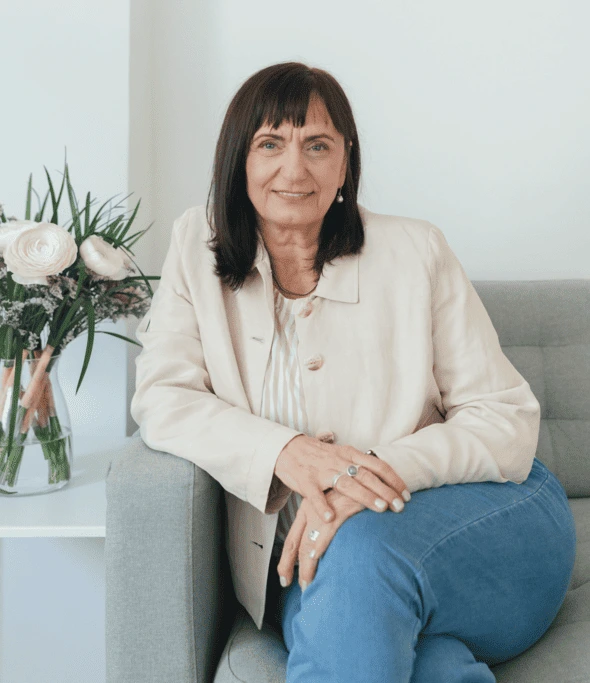
Kaja Strniša
Because I am naturally extremely curious and interested in countless things, I have gained experience in several different fields, especially in organizing events, various types of promotions, marketing, and working with websites and social networks. I am the creator of the po...
I have been interested in human functioning since I was a child – who we are, how we function and what we are capable of. I decided to study psychology at the end of primary school, when the school psychologist gave me a book on personality and child development to read, and I...
The BRST Psychology lecture on stress was excellent. We often hear a lot about stress, but the presenters finally explained simple and practical solutions for recognizing and managing stressful situations in a clear and accessible way. I realized that I’m sometimes not even aware when I’m under too much stress—now I recognize it better, and I’m trying to incorporate the exercises they shared into
The BRST Psychology lecture on stress was excellent. We often hear a lot about stress, but the presenters finally explained simple and practical solutions for recognizing and managing stressful situations in a clear and accessible way. I realized that I’m sometimes not even aware when I’m under too much stress—now I recognize it better, and I’m trying to incorporate the exercises they shared into my everyday life.
Read more
Marjan
Lecture participant
I am very grateful for all the knowledge I gained during the sessions and have since implemented in my everyday life. I learned how to cognitively restructure my thoughts, became aware of my needs around habits, and discovered ways to successfully establish new ones. I also learned relaxation techniques that I use daily, as well as what I can do myself to create a more supportive environment.
I am very grateful for all the knowledge I gained during the sessions and have since implemented in my everyday life. I learned how to cognitively restructure my thoughts, became aware of my needs around habits, and discovered ways to successfully establish new ones. I also learned relaxation techniques that I use daily, as well as what I can do myself to create a more supportive environment.
I always felt accepted and truly heard.
Read more
Nina
Workshop participant
I decided to join BRST Psychology programs because I wanted to get to know myself better and step outside my comfort zone by allowing myself to be vulnerable, even among unfamiliar faces. Since starting the program, I’ve noticed that I am gentler with myself, judge myself less, overthink much less, and better understand why and how I function the way I do.
Throughout the sessions, I gained man
I decided to join BRST Psychology programs because I wanted to get to know myself better and step outside my comfort zone by allowing myself to be vulnerable, even among unfamiliar faces. Since starting the program, I’ve noticed that I am gentler with myself, judge myself less, overthink much less, and better understand why and how I function the way I do.
Throughout the sessions, I gained many insights about myself, and above all, practical and useful tools on how to help myself. Kaja led the workshops exceptionally well—what I appreciated most was that she truly listened to us and adapted the program to our needs and wishes. I also loved that everything took place in such a relaxed and welcoming atmosphere.
A wonderful experience!
Read more